Yaheetech Cat Tree Instructions: A Comprehensive Guide
Navigating the assembly of your Yaheetech cat tree requires careful attention to detail, ensuring a safe and enjoyable haven for your feline companion.
Understanding Your Yaheetech Cat Tree Package
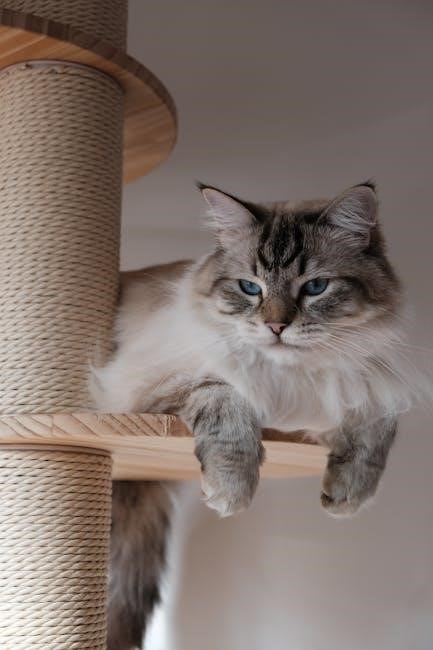
Upon receiving your Yaheetech cat tree, the first step is a thorough inventory of the package contents. Expect a collection of wooden platforms, vertical scratching posts – often covered in sisal rope – and supporting posts of varying lengths. A hardware packet containing screws, Allen wrenches, and potentially other fasteners will also be included.
Referencing the included instruction manual is crucial; it details each component with corresponding labels or diagrams. Don’t discard the packaging until you’ve confirmed all parts are present, as it can be helpful for identifying missing pieces when contacting customer support. The manual will also specify the model number, vital for accurate assistance.
Be aware that larger cat trees may be shipped in multiple boxes. Carefully inspect each box for any signs of damage during transit before opening. A complete understanding of the package’s contents sets the foundation for a smooth and successful assembly process.
Identifying All Components
A successful Yaheetech cat tree assembly hinges on correctly identifying each component. Typically, you’ll find base plates – these provide the foundational stability. Next are the vertical posts, often cylindrical and wrapped in sisal for scratching, varying in length to create different levels. Platforms, usually square or rectangular, serve as resting spots for your cat.
The hardware packet is equally important. Distinguish between different screw sizes, as they are used for specific connections. An Allen wrench (or multiple sizes) is essential for tightening these screws. Look for any additional components like plush cushions, dangling toys, or safety straps.
The instruction manual’s parts list is your key reference. Match each physical piece to its corresponding illustration and label. Careful identification prevents incorrect assembly and ensures the structural integrity of the finished cat tree. Don’t hesitate to lay everything out for a clear overview.
Essential Tools for Assembly
Assembling your Yaheetech cat tree requires a few key tools to ensure a secure and stable structure. A screwdriver is paramount – both Phillips head and flathead may be necessary depending on the screw types included. An Allen wrench, usually provided in the hardware packet, is crucial for tightening the bolts that connect the posts and platforms.
While not always essential, a rubber mallet can be helpful for gently tapping pieces together, especially when aligning posts with base plates. A power drill with appropriate bits can expedite the process, but use it cautiously to avoid over-tightening and stripping screws.
Having a soft cloth on hand is useful to protect surfaces during assembly. Finally, a well-lit workspace and a clear area to lay out components will significantly streamline the process. Gathering these tools beforehand will make the assembly much smoother and more efficient.
Preparing Your Workspace
Before embarking on the assembly of your Yaheetech cat tree, proper workspace preparation is vital for a smooth and frustration-free experience. Begin by selecting a spacious, flat surface – a living room floor or a large, protected area is ideal. Clear the area of any obstacles, including furniture, toys, and other items that could impede your progress.
Protect your flooring with a drop cloth or blanket to prevent scratches or damage during assembly. Lay out all the components of the cat tree, referencing the parts list to ensure everything is present. Organize the hardware (screws, bolts, Allen wrenches) into separate containers for easy access.
Good lighting is essential for clearly seeing the instructions and identifying parts. Finally, ensure you have enough room to maneuver around the partially assembled tree as you build it upwards. A well-prepared workspace sets the stage for a successful assembly.
Step-by-Step Assembly Process
Follow detailed instructions meticulously, beginning with the base, then attaching vertical posts and platforms, prioritizing stability and safety for your feline friend.
Assembling the Base
The foundation of a secure and enjoyable cat tree lies in a properly assembled base. Begin by identifying the base panels – typically the largest components in your Yaheetech package. Align these panels according to the instruction manual, ensuring the pre-drilled holes are facing the correct direction for subsequent attachments.
Utilizing the provided screws and an appropriate screwdriver, carefully fasten the base panels together. It’s crucial to avoid over-tightening at this stage, as it can potentially strip the screw holes. Focus on achieving a snug fit for each screw, ensuring all corners are square and the base is relatively stable before fully tightening.
A sturdy base is paramount for preventing wobbling and ensuring the cat tree can withstand enthusiastic climbing. Double-check all connections, and if any gaps or misalignment are present, loosen the screws and readjust the panels before re-tightening. Remember, a solid base is the first critical step towards a safe and satisfying cat tree experience.
Attaching the Vertical Posts
Once the base is securely assembled, the next step involves attaching the vertical posts, which provide essential structural support and climbing opportunities. Identify the posts – usually covered in sisal rope – and locate the corresponding threaded inserts on the base. Carefully screw the posts into these inserts, applying firm and even pressure.
Hand-tightening is recommended initially to ensure proper alignment. Once all posts are partially secured, use an Allen wrench (provided in your kit) to fully tighten them. Again, avoid excessive force to prevent damage to the threads. Ensure each post stands upright and is firmly anchored to the base, resisting any lateral movement.
Properly secured posts are vital for the overall stability of the cat tree. Regularly check these connections, especially after initial use, to ensure they remain tight. A wobbly post can compromise the entire structure, potentially leading to accidents. Prioritize a secure attachment for a safe climbing experience.
Securing the Platforms
With the vertical posts firmly in place, it’s time to attach the platforms, creating comfortable resting spots for your cat. Locate the platforms and the corresponding screws and bolts – often differentiated by size. Align each platform with the pre-drilled holes on the vertical posts, ensuring a flush and secure fit.
Insert the screws or bolts through the platform and into the posts, and hand-tighten them initially. Once all fasteners are in place for a specific platform, use the Allen wrench to systematically tighten each one. Tighten in a diagonal pattern to distribute pressure evenly and prevent warping.
Double-check that all platforms are securely fastened and level. A stable platform is crucial for your cat’s safety and comfort. Regularly inspect these connections, as movement can loosen the screws over time. A well-secured platform provides a safe and relaxing space for your feline friend.
Installing Scratching Posts
Scratching posts are essential components, satisfying your cat’s natural instincts and protecting your furniture. Locate the scratching posts – typically covered in sisal rope – and identify their attachment points on the base or platforms. Some posts screw directly into the base, while others attach to platforms using bolts.
Align the scratching post with the designated area and insert the provided screws or bolts. Hand-tighten initially, then use the Allen wrench to securely fasten the post. Positioning scratching posts at an angle encourages optimal use and provides a more natural scratching experience for your cat.
Ensure the sisal rope is tightly wound and free from loose strands. A firmly attached scratching post will withstand vigorous use and provide long-lasting enjoyment for your feline companion. Regularly inspect the posts for wear and tear, and replace them as needed to maintain a satisfying scratching surface.
Ensuring Stability and Safety
Prioritize a secure structure by meticulously tightening all screws and bolts, and diligently checking for any wobbling to guarantee a safe climbing experience.
Tightening All Screws and Bolts
Achieving optimal stability for your Yaheetech cat tree fundamentally relies on the proper tightening of every screw and bolt included in the package. Don’t underestimate this crucial step; a loose connection can compromise the entire structure, potentially leading to instability and posing a safety risk to your cat.
Utilize the provided Allen wrench and screwdriver, applying firm and consistent pressure. Avoid over-tightening, as this could strip the screw holes or damage the wood. Instead, aim for a snug fit – screws should be securely in place without any wiggle room.
Begin with the base components, ensuring they are firmly connected before moving upwards. Systematically work your way through each platform and post, double-checking each fastener. Periodically reassess tightness after initial use, as components may settle slightly. Remember, a well-secured cat tree is a happy and safe cat tree!
Checking for Wobbling
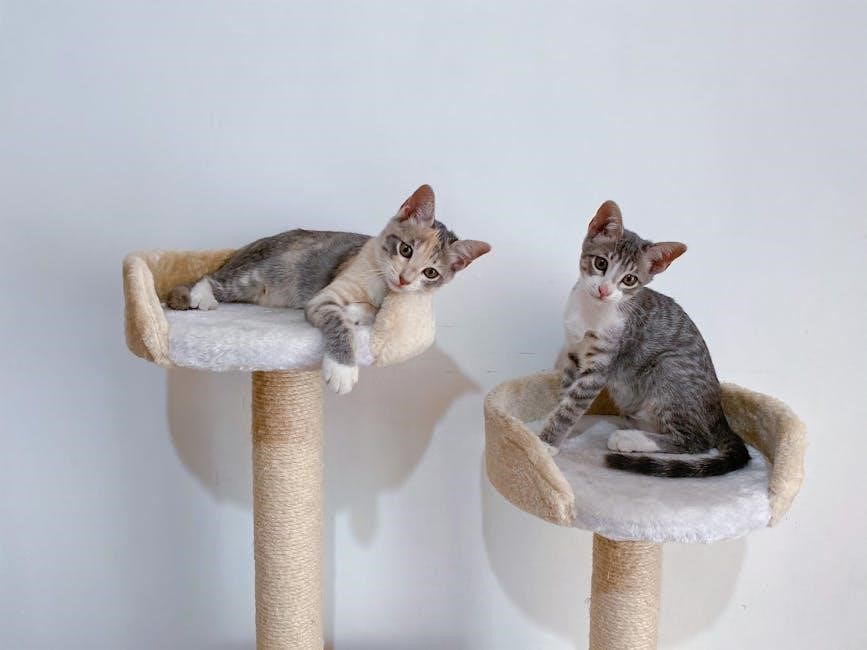
Post-assembly, a thorough wobble test is paramount to guaranteeing your cat’s safety and enjoyment. Gently apply pressure to various points of the cat tree – the top, sides, and base – observing for any instability. Even a slight wobble indicates a potential issue requiring immediate attention.
If wobbling is detected, systematically re-examine all screw and bolt connections, focusing on the base and any recently assembled sections. Tighten any loose fasteners, but again, avoid over-tightening. Ensure the tree is positioned on a level surface; uneven flooring can contribute to instability.
Consider using furniture levelers under the base if your floor is uneven. A stable foundation is critical, especially for taller cat trees. Repeat the wobble test after each adjustment until the structure feels solid and secure. Prioritize safety – a wobbly tree is a hazard!
Base Stability – A Critical First Step
Establishing a rock-solid base is undeniably the most crucial phase of Yaheetech cat tree assembly. The entire structure’s integrity hinges on this initial step, directly impacting your cat’s safety during climbing and play. Begin by ensuring all base components are correctly aligned and firmly connected, referencing the instruction manual’s diagrams meticulously.
Prioritize securely tightening all screws and bolts associated with the base, utilizing the provided Allen wrench. Avoid over-tightening, which can strip the threads or damage the wood. A properly assembled base should sit flush against the floor, without any rocking or tilting.
Remember, a sturdy base prevents tipping, especially with energetic cats. Double-check all connections before proceeding to subsequent assembly stages. A stable foundation guarantees a safe and enjoyable experience for your feline friend, minimizing potential accidents.
Proper Screw and Allen Wrench Usage
Mastering the correct application of screws and the Allen wrench is paramount for a secure and lasting Yaheetech cat tree assembly. The provided Allen wrench is specifically designed to fit the screws included, ensuring optimal tightening without damaging the components.
Insert the Allen wrench fully into the screw head before applying pressure. Rotate the wrench smoothly and consistently, avoiding jerky motions. Tighten screws until snug, but refrain from over-tightening, as this can strip the screw holes or crack the wood.
Always double-check that each screw is firmly seated and doesn’t protrude. If a screw feels loose, re-tighten it carefully. Utilizing the correct tools and technique guarantees a stable structure, safeguarding your cat during playtime and rest. Consistent, proper tightening is key to longevity.
Enhancing Your Cat’s Experience
Maximize feline enjoyment by strategically adding cozy blankets, engaging toys, and enticing catnip to the assembled Yaheetech cat tree for ultimate comfort.
Adding Cozy Items (Toys, Blankets)
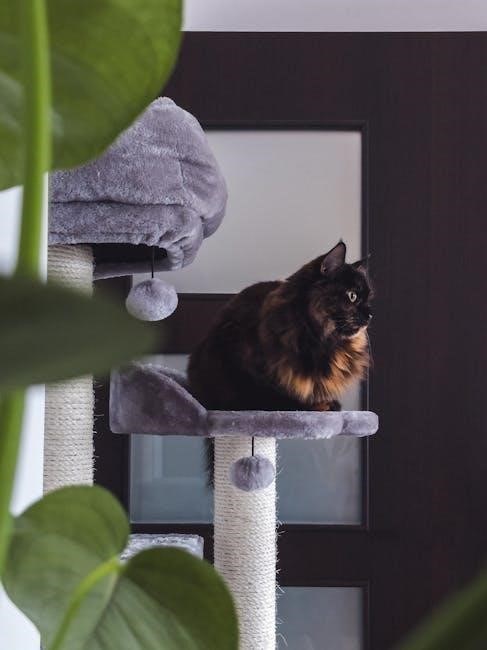
Transform your Yaheetech cat tree into an irresistible paradise for your feline friend by thoughtfully incorporating cozy items. Soft blankets draped over platforms provide warm, inviting spots for napping and lounging, encouraging your cat to spend more time enjoying their new elevated space. Consider the textures your cat prefers – some enjoy plush fleece, while others favor smoother materials.
Don’t forget the fun! Strategically placed toys, such as dangling mice, feather wands, or crinkle balls, stimulate play and exercise. Securely attach these toys to prevent accidental swallowing. Rotating the toys periodically keeps your cat engaged and prevents boredom. Small, cat-safe plush toys can also add a comforting element. Observe your cat’s preferences to determine which toys they enjoy most, and arrange them to encourage climbing and exploration throughout the tree. A happy cat is a playful cat!
Positioning Scratching Posts for Optimal Use
Maximize the functionality of your Yaheetech cat tree by strategically positioning the scratching posts. Angled posts, as recommended, are particularly effective as they mimic the natural scratching angles cats prefer, promoting healthy claw maintenance and preventing damage to your furniture. Observe your cat’s natural scratching habits – do they prefer to stretch upwards or scratch horizontally?
Place posts in high-traffic areas or near where your cat already likes to scratch. Multiple scratching surfaces, utilizing different materials like sisal rope or carpet, cater to varied preferences. Ensure the posts are stable and won’t wobble during use. Consider the height of the posts; taller posts allow for a full-body stretch, while shorter ones are suitable for quick scratches. Encourage use by occasionally rubbing catnip onto the posts, making them even more appealing and reinforcing positive scratching behavior.
Catnip Application for Attraction
Entice your feline friend to explore and utilize their new Yaheetech cat tree with the irresistible allure of catnip! This natural herb is a powerful attractant for most cats, stimulating playfulness and encouraging them to investigate the various features of the tree. Sprinkle a small amount of dried catnip onto the platforms, scratching posts, and within the enclosed areas.
Observe your cat’s reaction; some cats become instantly energized, while others may exhibit a more relaxed, euphoric response. Reapply catnip periodically, as its potency diminishes over time. Consider using catnip-infused toys or sprays for a longer-lasting effect. However, moderation is key – overuse can desensitize your cat to its effects. A little catnip goes a long way in transforming the cat tree into a captivating and cherished space for your beloved pet, fostering positive associations and encouraging healthy activity.
Troubleshooting Common Issues
Addressing potential problems like missing parts, wobbling, or screw tightening difficulties is crucial for a secure and enjoyable cat tree experience for your pet.
Dealing with Missing Parts
Discovering missing components during assembly can be frustrating, but don’t immediately panic! First, carefully re-examine all packaging materials – sometimes smaller parts are tucked away unexpectedly. Next, consult the parts list included in your Yaheetech cat tree’s instruction manual to confirm exactly what is missing.
If a part is genuinely absent, the best course of action is to contact Yaheetech’s customer support directly. Most retailers and Yaheetech themselves offer replacement parts, often free of charge, especially if the purchase is recent. Be prepared to provide your order number, the model number of the cat tree (e.g., 592503), and a clear description of the missing item.
Alternatively, depending on the part, a trip to a local hardware store might yield a suitable substitute. However, prioritize using genuine Yaheetech replacements whenever possible to maintain the structural integrity and safety of the cat tree. Avoid improvising with materials that could potentially harm your cat.
Addressing Wobbling After Assembly
A wobbly cat tree poses a safety risk, so addressing it promptly is crucial. Begin by systematically re-tightening all screws and bolts, applying firm and even pressure. Ensure the Allen wrench is fully seated to maximize tightening force. Pay particular attention to connections between the base, vertical posts, and platforms – these are common culprits.
If wobbling persists, carefully inspect the base. Confirm it’s positioned on a level surface; even a slight incline can cause instability. Consider using furniture levelers under the base’s feet to compensate for uneven flooring. Double-check that all components are correctly aligned and fully inserted into their designated slots.
For significant wobbling, temporarily disassemble the affected section and reassemble it, meticulously verifying each connection. A stable base is paramount; ensure it’s securely fastened before adding upper levels. Prioritize safety – a wobbly tree could topple and injure your cat.
Resolving Screw Tightening Problems
Encountering difficulty tightening screws is common during cat tree assembly. First, verify you’re using the correct Allen wrench size – forcing an ill-fitting tool can strip the screw head. Apply consistent, firm pressure while turning; avoid jerky motions. If a screw spins freely without tightening, the threaded insert within the wood may be damaged.
For stripped screws, avoid excessive force, as this will worsen the problem. Consider using a rubber band or steel wool between the Allen wrench and the screw head to improve grip. In some cases, a slightly larger screw may provide a secure hold, but ensure it doesn’t protrude dangerously.
If the issue persists, contact Yaheetech’s customer support for replacement parts. Do not attempt to modify the screws or force a solution that compromises the tree’s structural integrity. Proper screw tightening is vital for stability and your cat’s safety.